missionlameturtle:

iwilltrytobereasonable:

deputychairman:

marjorierose:

lindsayribar:

deputychairman:

mariganath:

imsfire2:

deputychairman:

This evening it is important that I share my conclusions on the Best Names of Books Ever, and these are:

  • We have always lived in the castle (Shirley Jackson)
  • When I lived in modern times (Linda Grant)
  • The hand that first held mine (Maggie O’Farrell)
  • The left hand of darkness (Ursula Le Guin)
  • The sun also rises (I know, I KNOW, it’s Hemingway, and I enjoy mocking his manly prose style as much as the next woman!!! I do!! but this is a hell of a title and I’m a big enough person to give him that)
  • Where the wild things are (Maurice Sendak; I feel you’re all back with me)

i feel like there’s a simliar tension of time and place in all of these, there’s probably a literary term I don’t know to describe it

 what are your Best Names of Books, friends? tell me more great titles!

Books I first took off a shelf because of the title:

  • A Girl of the Limberlost (Gene Stratton-Porter)
  • The Wild Road (Gabriel King)
  • The King Must Die (Mary Renault)
  • The Towers of Trebizond (Rose Macaulay)
  • Shadows in Bronze (Lindsey Davis)
  • The Spiral Dance (Starhawk)
  • The Hare with Amber Eyes (Edmund de Waal)

Never regretted any of them.  A sort of concrete clarity of image in each of those titles, that catches the eye and seems to say “Try me, I have something to say.” 

I snoop around free ebook events a lot, and take my picks according to title all. the. time. Still haven’t regretted a single one. Some of the most recent are:

  • The Truth About Mud (Christina L. Rozelle)
  • The Increasingly Transparent Girl (Matthew Stott)
  • One Day We’ll All Be Dead and None of This Will Matter (Scaachi Koul)
  • Custer Died for Your Sins (Vine Deloria, Jr)
  • You’re Welcome, Universe (Whitney Gardner)
  • A Skinful of Shadows (Frances Hardinge)
  • The Finch and the Devil’s Petticoats (Isabella Bleszynski)

I particularly like ‘The hare with amber eyes’ and ‘One day we’ll all be dead and none of this will matter’! They’re like little miniature poems! At this point I should add another honorable mention for @lindsayribar’s ‘Rocks fall, everyone dies’

Eeeee, thanks for the shoutout! ❤

Personally, I’m looking forward to “Topsea: A Friendly Town That’s Almost Always By The Ocean!” by Kir Fox and M. Shelley Coats. 🙂

Pretty much all of Hemingway’s books have killer titles (A Farewell to Arms, A Moveable Feast, Death in the Afternoon). Although Le Guin’s are generally good, I often have trouble remembering which story goes with which title. (Until I read The Dispossessed, I thought that was the name of the book that is actually Always Coming Home, and actually Always Coming Home would have been a perfectly good title for The Dispossessed. You could likewise swap titles between the stories “The Birthday of the World” and “Paradises Lost” and you’d be doing fine).

It’s not all that evocative on its own, but the title of Anthony Powell’s The Kindly Ones is exquisitely correct for the book that it is. And then later in the cycle there’s Books Do Furnish a Room.

Oh man, ‘Books do furnish a room’! Appropriately enough my parents had this on their bookshelves when I was a kid and I sort of absorbed the title as a self-evident Truth. Without googling because that would take the fun out of it, I also remember ‘Casaonva’s Chinese Restaurant’ and ‘Temporary Kings’ from that series as part of the visual wallpaper of my childhood. Anthony Powell is terribly out of fashion now, though, isn’t he?

Okay just from my shelves:

Homeward Bounders by Diana Wynne Jones

One, Two, Three, Infinity by George Gamow

Earth is Enough by Isaac Asimov though I think the author really makes that one

basically all of Gabriel Garcia Marquez’s titles

The Medusa and the Snail by Lewis Thomas

The Wizards of Armageddon by Fred Kaplan

Something Torn and New by Ngugi wa Thiong’o

(dis?)Honorable mention goes to Rocks Fall Everyone Dies by @lindsayribar, The Radioactive Camel Affair by Peter Leslie, The Affair of the Gentle Saboteur by Brandon Keith (what even is it with MFU novels?!)and The Bible cause it just means “book”.

While I can think of some good non YA examples (A River Runs Through It is a personal fave, & I’m with you that while Hemingway’s prose is dreadful his titles are spot-on), I think frankly YA blows the competition out of the water in this category. How do you beat book names like “The View From Saturday” and “A Wrinkle In Time” and “How To Eat Fried Worms”?

ALTHOUGH I can’t believe I forgot to include Annie Dillard’s masterful “Teaching A Stone To Talk”, and YMMV but I’ve always loved something about the title “Nine Princes In Amber”.

iwilltrytobereasonable:

deputychairman:

marjorierose:

lindsayribar:

deputychairman:

mariganath:

imsfire2:

deputychairman:

This evening it is important that I share my conclusions on the Best Names of Books Ever, and these are:

  • We have always lived in the castle (Shirley Jackson)
  • When I lived in modern times (Linda Grant)
  • The hand that first held mine (Maggie O’Farrell)
  • The left hand of darkness (Ursula Le Guin)
  • The sun also rises (I know, I KNOW, it’s Hemingway, and I enjoy mocking his manly prose style as much as the next woman!!! I do!! but this is a hell of a title and I’m a big enough person to give him that)
  • Where the wild things are (Maurice Sendak; I feel you’re all back with me)

i feel like there’s a simliar tension of time and place in all of these, there’s probably a literary term I don’t know to describe it

 what are your Best Names of Books, friends? tell me more great titles!

Books I first took off a shelf because of the title:

  • A Girl of the Limberlost (Gene Stratton-Porter)
  • The Wild Road (Gabriel King)
  • The King Must Die (Mary Renault)
  • The Towers of Trebizond (Rose Macaulay)
  • Shadows in Bronze (Lindsey Davis)
  • The Spiral Dance (Starhawk)
  • The Hare with Amber Eyes (Edmund de Waal)

Never regretted any of them.  A sort of concrete clarity of image in each of those titles, that catches the eye and seems to say “Try me, I have something to say.” 

I snoop around free ebook events a lot, and take my picks according to title all. the. time. Still haven’t regretted a single one. Some of the most recent are:

  • The Truth About Mud (Christina L. Rozelle)
  • The Increasingly Transparent Girl (Matthew Stott)
  • One Day We’ll All Be Dead and None of This Will Matter (Scaachi Koul)
  • Custer Died for Your Sins (Vine Deloria, Jr)
  • You’re Welcome, Universe (Whitney Gardner)
  • A Skinful of Shadows (Frances Hardinge)
  • The Finch and the Devil’s Petticoats (Isabella Bleszynski)

I particularly like ‘The hare with amber eyes’ and ‘One day we’ll all be dead and none of this will matter’! They’re like little miniature poems! At this point I should add another honorable mention for @lindsayribar’s ‘Rocks fall, everyone dies’

Eeeee, thanks for the shoutout! ❤

Personally, I’m looking forward to “Topsea: A Friendly Town That’s Almost Always By The Ocean!” by Kir Fox and M. Shelley Coats. 🙂

Pretty much all of Hemingway’s books have killer titles (A Farewell to Arms, A Moveable Feast, Death in the Afternoon). Although Le Guin’s are generally good, I often have trouble remembering which story goes with which title. (Until I read The Dispossessed, I thought that was the name of the book that is actually Always Coming Home, and actually Always Coming Home would have been a perfectly good title for The Dispossessed. You could likewise swap titles between the stories “The Birthday of the World” and “Paradises Lost” and you’d be doing fine).

It’s not all that evocative on its own, but the title of Anthony Powell’s The Kindly Ones is exquisitely correct for the book that it is. And then later in the cycle there’s Books Do Furnish a Room.

Oh man, ‘Books do furnish a room’! Appropriately enough my parents had this on their bookshelves when I was a kid and I sort of absorbed the title as a self-evident Truth. Without googling because that would take the fun out of it, I also remember ‘Casaonva’s Chinese Restaurant’ and ‘Temporary Kings’ from that series as part of the visual wallpaper of my childhood. Anthony Powell is terribly out of fashion now, though, isn’t he?

Okay just from my shelves:

Homeward Bounders by Diana Wynne Jones

One, Two, Three, Infinity by George Gamow

Earth is Enough by Isaac Asimov though I think the author really makes that one

basically all of Gabriel Garcia Marquez’s titles

The Medusa and the Snail by Lewis Thomas

The Wizards of Armageddon by Fred Kaplan

Something Torn and New by Ngugi wa Thiong’o

(dis?)Honorable mention goes to Rocks Fall Everyone Dies by @lindsayribar, The Radioactive Camel Affair by Peter Leslie, The Affair of the Gentle Saboteur by Brandon Keith (what even is it with MFU novels?!)and The Bible cause it just means “book”.

While I can think of some good non YA examples (A River Runs Through It is a personal fave, & I’m with you that while Hemingway’s prose is dreadful his titles are spot-on), I think frankly YA blows the competition out of the water in this category. How do you beat book names like “The View From Saturday” and “A Wrinkle In Time” and “How To Eat Fried Worms”?

cerulean-beekeeper:

literallyaflame:

youngalientype:

mod2amaryllis:

chubby-aphrodite:

darthlenaplant:

nerdy-pharmacy-daydreams:

bluegone:

etherealastraea:

dihydrogenmonoxideawareness:

Why would anyone want to consume it!?

I teach my 7th graders about the dangers of dihydrogen monoxide.

I bring in a graduated cylinder of it and we talk about how it’s used in nuclear power plants and gmo crops. How inhaling even the small amount I’m holding can lead to suffocation or even death. It’s found in vaccines and cancer cells, but also in infant formula and pet food. It is a huge component of acid rain, can cause severe burns, and has been found in places that were thought to be the most pristine and unpolluted locations on earth.

We talk about how there are little to no regulations on this chemical. No bans, no warning labels, and most manufacturers don’t even have to disclose their use of it in their products.

My students are outraged. We talk about what we can do. Create posters and flyers to spread awareness. Contact our senators with petitions to ban DHMO. Spread this information all over social media.

Then I explain that the real problem with dihydrogen monoxide is that….when I am thirsty…there is just nothing else as refreshing, and then I watch their looks of absolute shock and horror as I drink the entire vial down.

I. Fucking. Love. This.

This is how misinformation works. How propaganda works. How manipulation works.

may our education be stronger than fake news

Amen.

To those who don’t get it:

“Dihydrogen monoxide” is the chemical name for water, AKA H2O.

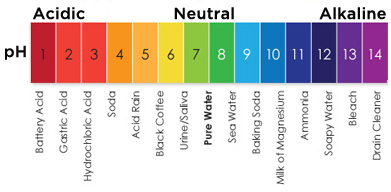
another important element of understanding the joke is understanding how pH levels work

yup.  that’s a higher number alright.

“Everyone who has ever touched or consumed this chemical has died”

Oh my god one of my teachers tried to do this in middle school (sixth grade) and like five minutes into class I raised my hand and said “aren’t you just talking about water?” and I ruined everything and to this day I feel kinda guilty about it

Librarians use this sometime to talk about how to make sure you have a legit, unbiased resource.

When Men Write Fanfiction, It Isn’t Fanfiction Because It’s “Academic”

fanhackers:

Some of you might have spotted this week’s kerfuffle about how it if was written by a dude it can’t be fanfic, in the guise of an interview with author Lonely Christopher, who claims not to have written fan fiction of Stephen King’s The Shining. The Mary Sue article covers it pretty well (and has a link to the original interview, should you be that way inclined), but we thought we’d highlight some Fan Studies research that could help Christopher put his work in the wider fan fiction context.

Here are a couple of extracts from the interview to get us started:

“LC: The book can be read as a self-contained “novel,” but it’s more than that. I used another text conceptually, structurally, and materially to generate a resultant yet original work. That’s what I mean by “source.”

The text that I was utilizing was the novel The Shining by Stephen King and the subsequent media iterations and interpretations and its cultural ubiquity. So I wrote my story in relation to another, more specifically on top of it. I took the basic tropes of The Shining and replicated and subverted them, and I also took chunks of language and interwove material pieces of Stephen King’s novel.

(…)

Interviewer: You’ve described this book as “intertextual.” Tell us a little bit more about this book’s relationship to other literature.

LC: The book is a concerted rejection of the standards of any type of literature, so in that way it is reacting to the formal elements it eschews, and interacting with readerly expectations as well as the history of the medium.

I guess the reason why this isn’t “fan fiction” is because, first of all, it’s not enjoyable in the same way and then it’s vaguely academic. Aesthetically speaking, it owes much to Stein, Beckett, Robbe-Grillet, and Bernhard. Intellectually, it has a relationship to Barthes, Foucault, Derrida, Debord, and especially Baudrillard. So it is having conversations with different texts in different ways.”

You may recall a couple of relevant articles, such as this one by Abigail Derecho on fan fiction as “archontic literature”. One of the really interesting points Derecho makes in it is how fan fiction writers will frequently repeat the same motif, explore the same scene, but with a difference. (For those interested in the “vaguely academic”, Derecho bases on Deleuze’s concept of “repetition with a difference”.) So we may look at something from a different character’s point of view, or take a group of characters and put them in a coffee shop AU, or try to work out what would be different if a character had made a slightly different choice. You know what that does? It plays with and challenges the reader’s expectations, and allows readers to make meanings from both the similarities and the differences between the two texts.

You may also remember this paper by Mafalda Stasi which looks at fan fiction as a “palimpsest” – the medieval practice of partially erasing and writing over past manuscripts, creating layers of text and meaning. Does that sound a bit like what Christopher is doung by writing his novel “on top of” The Shining? Maybe a bit.

Fan fiction and transformative work intellectual property law scholars like Rebecca Tushnet may also have something to say about Christopher’s taking “chunks of language” and “inter[weaving] material pieces” of King’s novel, and how ideas about this both among the fan fiction community and among rightholders of the commercial works we base our fan fiction on have evolved over time to a point where Lonely Christopher can do this.

When Men Write Fanfiction, It Isn’t Fanfiction Because It’s “Academic”

poorlytimed:

transjemder:

Millennial culture is having two wildly different conversations with the same person on two different apps at the exact same time

conversation 1: cheese borger

conversation 2: that’s why I think I’m so afraid of making myself vulnerable, because my father taught me I couldn’t ever truly trust anyone